
Property
Otegha Uwagba on homeownership
By Otegha Uwagba
The Habit Lab
“Intention is fascinating. It’s what makes us human, but it’s also the key to finishing what we start.” Chris Bailey, bestselling author and productivity expert, is talking about one of the overlooked, but immensely powerful weapons when it comes to better financial habits – the daily structures that compound into lifestyle changes.
His new book, ‘Intentional,’ draws on everything from neuroscience to Buddhism to explain how intentionality – not willpower – is the key to completing your goals and rewiring the way you think. “The more we activate the logical centres in our brain as we pursue our goals, the less aversive we find them, which makes us less likely to procrastinate,” he states in the book. This is about early decisions that are going to stick, and support your new habits – especially around money.
“Research shows 12 fundamental human values that we all share [see below*] but in different amounts. Knowing your strongest is critical for your goals. Our values are pretty consistent over time, so if you align your goal with your strongest values, you’re far more likely to achieve it. For example, you have a goal to save £10,000 but maybe ‘achievement’ isn’t a strong value for you, whereas ‘kindness’ might be. So you aim to save £11,000 and give £1000 to charity. This will give you more intention.”
“When something is unstructured, it makes it aversive, which leads to procrastination. Structure can short-circuit that loop – you don’t have to really think about your goals. You essentially trap a goal inside a framework in your life. For example, you automatically save 20% of your income every month, or check in with your accountability partner every Monday [see more on this below].”
“Yes but they have to be the right habits – there’s different asset classes. A very ‘high return habit’ would be automating savings, so that money just flows out when you get paid. It’s a structure that our goal can live inside of.”
“It’s very useful. Our goals need structure – it’s up to us to define that. We need to make sacrifices, so we don’t rely on willpower. It’s absolutely key to have rituals that you can connect to. And that’s why the Last Digit Widget works – setting money aside on a structured daily basis, synced into your routine.”
Find an ‘accountability partner’; somebody you don’t want to let down. Tell them about your money goal and make it lightweight, say ‘Every Monday, hold me to account for sending you this update.’ For example: ‘I ate in instead of eating out.’
Know your values. Some people value ‘pleasure’ the highest, so they want to travel the world. Others value ‘universalism’ or ‘self-direction’. Identify your top one or two. Align your money goals with those values and motivation will begin to feel effortless.
Shrink your resistance to ‘ugly’ tasks. Do you want to label your expenses for 30 minutes today? No way. What about 25? Still no. What about 10? Find what you’re no longer resistant to. At the beginning of a task, resistance is usually stacked up – like jumping into a cold pool. Once you’re in, you can keep swimming, but the jump is the hardest part.
“One of the best is mental contrasting; where we look at the timeline of our goal and think about what will trip us up or get in the way. This could be in relation to a savings habit or an investment plan. Anticipate obstacles and deal with them ahead of time.”
“Set three intentions that you’ll follow through that day, then a weekly one, followed by a list of longer-term goals. I suggest reviewing on a weekly basis. But remember: not all money habits are created equal. Commuting for free by bike instead of trains is a small goal but much more challenging than automating savings. That requires the act of willpower instead of a structure.”
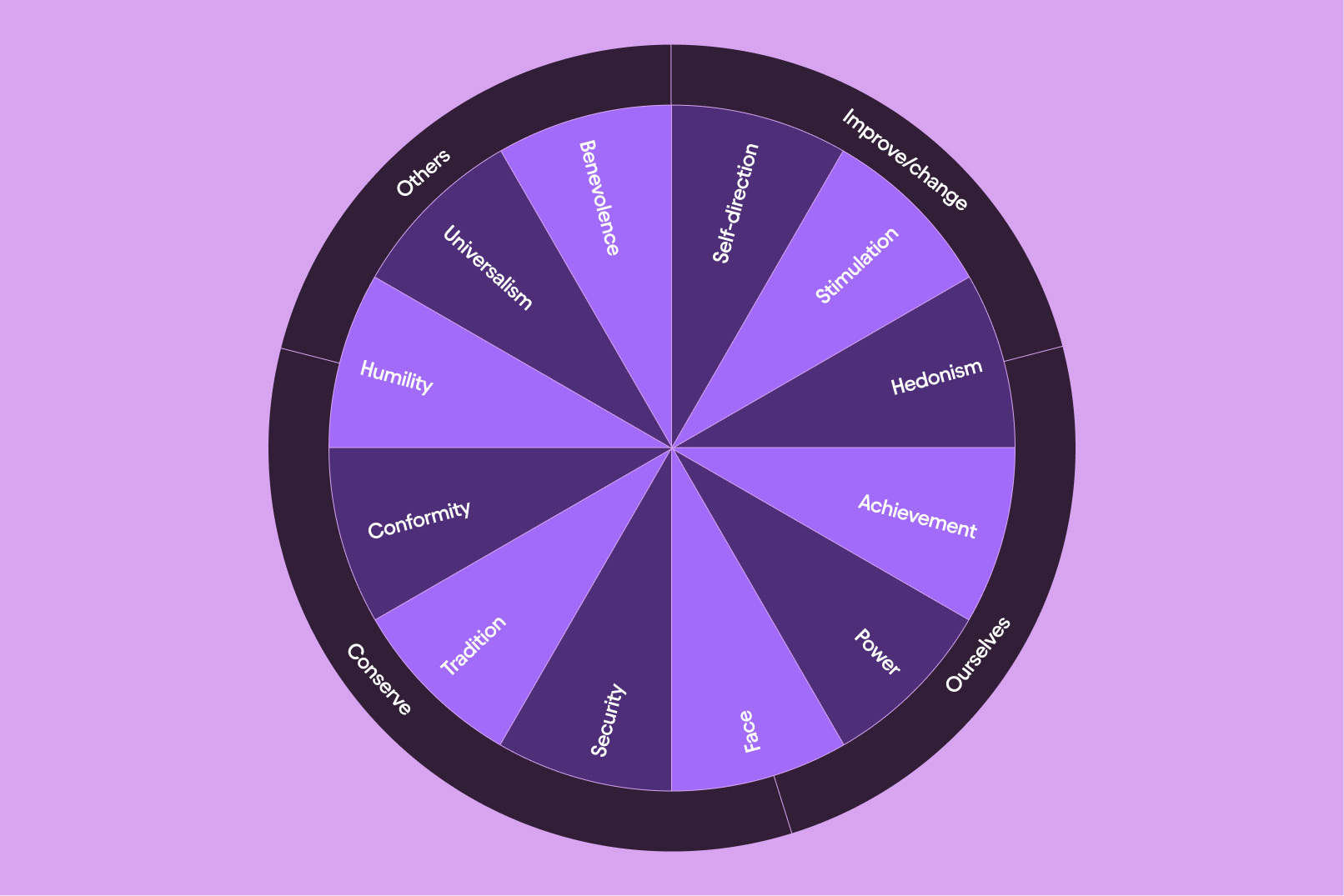
*Self-direction: Independent thought and action: choosing, creating, and exploring.
Stimulation: Excitement, novelty, and challenge in life.
Hedonism: Pleasure and sensuous gratification for oneself.
Achievement: Success through demonstrating competence according to social standards.
Power: Social status and prestige, control or dominance over people and resources.
Face: Preserving your own image and avoiding humiliation.
Security: Safety, harmony and stability of society, relationships, and self.
Conformity: The restraint of actions, inclinations, and impulses that are likely to upset or harm others and violate social expectations or norms.
Humility: Understanding your insignificance in the grand scheme of things, while believing you are a part of something greater than yourself.
Tradition: Respect, commitment, and acceptance of the customs and ideas that traditional culture or religion provides.
Benevolence: Preservation and enhancement of the welfare of people with whom one is in frequent personal contact.
Universalism: Understanding, appreciation, tolerance, and protection for the welfare of all people and of nature.
** The article above includes general information, including the opinion’s of Chris Bailey. It should not be taken as financial advice. If you have questions about your specific circumstances, please speak to an independent financial advisor.
Looking to become more intentional about setting money aside?
Try our Last Digit Widget challengeProperty
By Otegha Uwagba
Money truths
By Justin Quirk

How Much Does It Cost?
By Hannah Summers

Group holidays
By Kat Storr