The Moment I Made It
“Know your numbers inside out.”
By Pippa Moyle
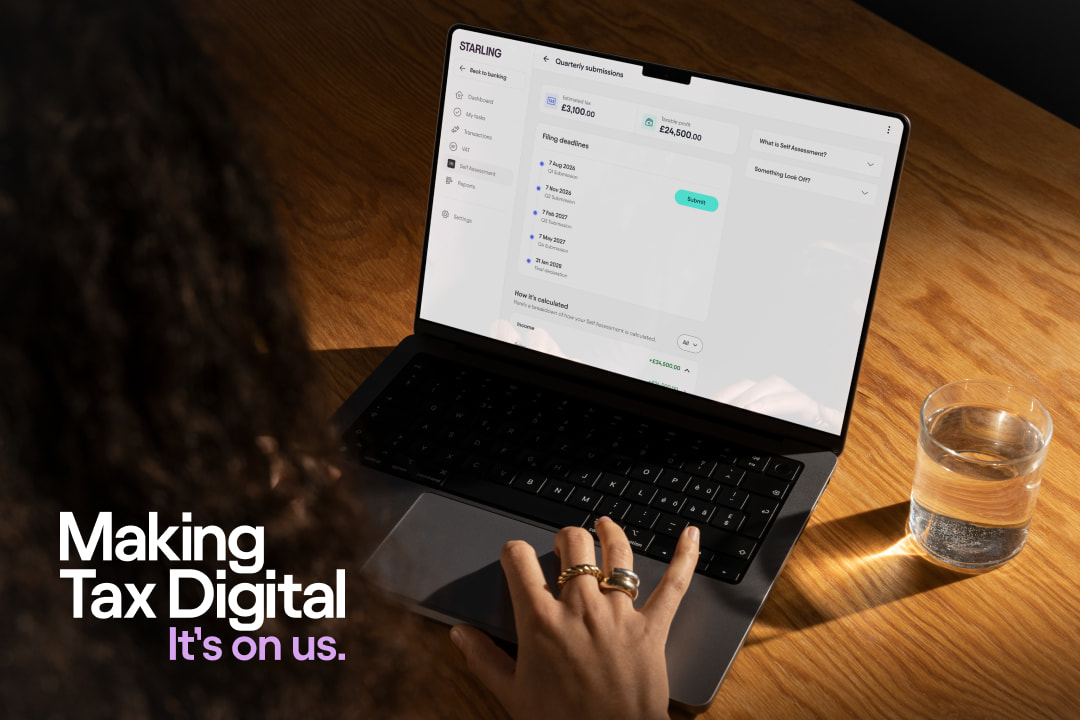
Making Tax Digital

The phrase ‘Making Tax Digital’ has been thrown around for the last ten years (yes, ten years). And still, many business owners don’t have a clue what it involves, or if they’re impacted. If that’s you – you’re in the right place.
I’m Dan Hogan, co-founder of accountancy software company, Ember. And I’m now Director of Business Tools at Starling. Let’s answer your questions.
From 6 April 2026, sole traders and landlords who earned over £50,000 (before expenses) in the 2024-2025 tax year will need to file quarterly reports on income and expenditure.
How? Through HMRC-recognised software, like Starling Accounting (coming soon). You’ll still do an end-of-year self-assessment by 31 January, known as a Final Declaration. But going forward, you’ll submit this straight from the software.
This initial £50,000 threshold is for combined income, meaning that if your gross turnover was £35,000 from self-employment and £25,000 from property, MTD would apply to you. Please note: there are some exemptions, details are on the HMRC website.
I’ve seen YouTubers saying this and journalists describing the changes as ‘hellish’. But these quarterly reports aren’t full-on tax returns, there’s still just one of those. And they’ll help you get into the habit of running the numbers little and often, rather than making January even more miserable by leaving everything to the last minute.

You may have seen headlines that talk about an average cost of £320 to switch to government-approved software, then £110 a year in fees.*
But Starling’s MTD for Income Tax tool is a free feature, part of Starling Accounting. So if you’re with Starling, the only cost – unless you’ve chosen to ask your accountant for help – should be a glass of something to celebrate when you press ‘submit’ on your first report.
Even though your business account will be connected to HMRC-recognised software (via industry standard APIs), they won’t see the details of every transaction – just the key figures. This includes income and expenditure, broken down into categories that map across into HMRC’s system.
Making Tax Digital is more about increasing accuracy than increasing visibility. Your quarterly reports build up into your final submission – and don’t include heaps of details.
Not if you currently spend the whole of December going through a shoebox of receipts and most of January going back and forth with your accountant…
The future? Doing everything in real-time. You can pay a supplier, categorise the payment, attach the invoice – and carry on with your day. If you do that, the quarterly reports should just involve going over what you’ve already categorised and uploaded – our tool will do the maths for you.
As for the benefits: knowing your numbers so you can plan ahead on cashflow. And avoiding the panic of being landed with a tax bill with no money set aside to pay it.
Tip: Starling customers can use Spaces to set money aside throughout the year – ready for your year-end tax bill.

That’s totally understandable – but these quarterly reports are really straightforward. There’s also a ‘soft landing’ period for your first year of MTD, meaning that if you file a quarterly report late, you won’t be fined.
If you’ve already got an accountant, you can keep leaning on them for your annual self-assessment submission – these are the numbers HMRC takes as gospel, and penalties will still apply if you file this submission late. But for your quarterly reports, you should be able to do these yourself, just by using HMRC-recognised software – like ours.
We know change is daunting, especially when it involves the taxman. But we’re here to help – so you can spend more time looking at your next business goal, and less time sifting through old receipts.
*See The Times, The Mirror, The Chronicle
Terms and conditions apply to the use of Starling Accounting.
The content and materials featured or linked in this article are for your information only and are not intended to address your particular circumstances or requirements. This information does not constitute advice in any way and should not be taken as such. If you have any questions, we recommend that you contact HMRC or speak to a qualified accountant, financial advisor and/or tax advisor.
Making Tax Digital isn’t optional – but paying for it is.
Learn more about our free tool