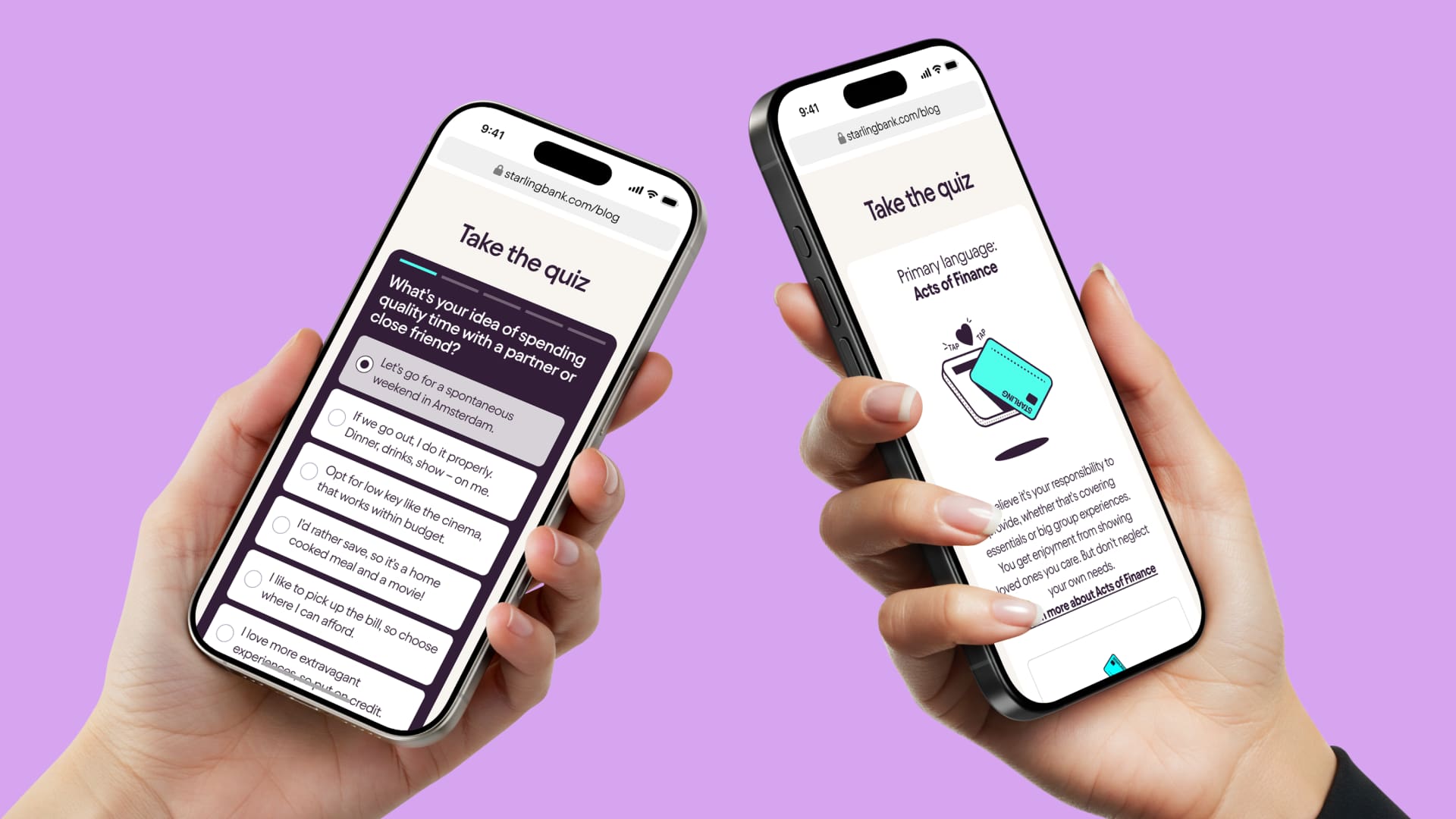
Money languages
“He likes to save, I like to spend”
By Emily Ash Powell
What’s your money language?

You’re an open book, talking about money openly and honestly. You’re known as the one that’s ‘good with money’ - not necessarily because you earn lots of it, but because you’re good at making it work hard.
You’re often seeking out new trends, tools and techniques. And nothing fazes you – you see money as empowering rather than something to be avoided or feared. Your financial IQ inspires friends and loved ones to get to grips with their own finances and you like to act as their cheerleader. After all, to you, money empowers relationships.
While money management comes easily to you, don’t let your confidence intimidate others; show you understand that money can be hard to get your head around.
If you feel that a loved one could be savvier with their spending and saving, but they’re not sure where to start, try making the point that it’s not about how much money you earn, but what you do with it that makes the biggest difference.
Try to encourage them to pick up a small easy habit to help them become good with money, such as checking their bank balance daily, setting a weekly budget, or separating their bills money from their fun money. Offer to help them keep up these good habits, before they can work their way up to saving larger amounts or investing.
Encourage general money conversations too, whether it’s about a restaurant bill that surprised you, a good discount you got online, or how a recent splurge has set you back. Talking about money, no matter how, can get them in the headspace of being more reflective about their spending and saving - a helpful step towards becoming good with money.
This money language can often be helpful and useful on money matters, but they might also be domineering when it comes to how shared money should be spent.
If you find it hard to speak the language of Money Know How, explain that money management doesn’t come easy to everyone, and it doesn’t necessarily mean their opinions on how money should be spent are the best.
If you have certain views on joint spending decisions, appeal to this money language’s benevolent side and ask for help! Chances are they’d love to help you work out how to budget and to come up with a plan for your saving and spending goals.
If you find it tricky asking for help, why not share a news story or a TikTok you’ve seen around money management, and see if that sparks conversation.
And remember, just because they’re good with money doesn’t mean you should follow their advice blindly - if you’ve got a different view on what constitutes good money management, tell them! It might spark a healthy debate.
Like attracts like with Money Know How, but this money language also fares well with Scarcity Mindset.
Chances are, you already have some decent money habits, so why not encourage others to talk about money as freely as you do, and share this tool with them?
The article above includes general information and should not be taken as financial advice. If you have questions about your specific circumstances, please speak to an independent financial advisor.
Money languages
By Emily Ash Powell
What’s your money language?
By Ellie Austin Williams & Hayley Quinn

What’s your money language?
By Ellie Austin Williams & Hayley Quinn

What’s your money language?
By Ellie Austin Williams & Hayley Quinn